

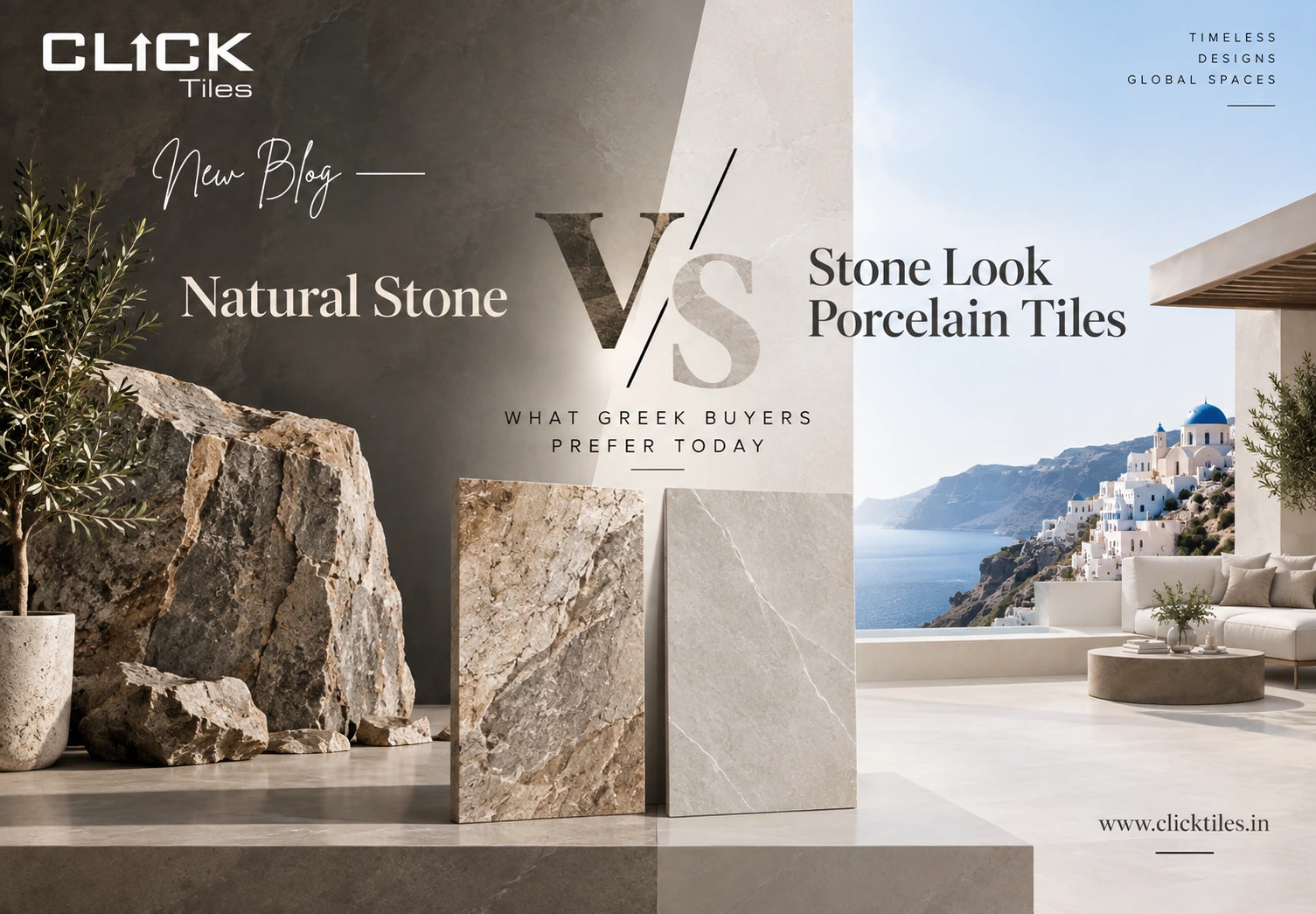
Natural stone has always had an advantage that is difficult to manufacture: authenticity.
Every vein is different. Every slab has character. In Greece, where stone is already part of the architectural language, that appeal is not disappearing anytime soon.
But the buying conversation is changing.
A hotel developer may love natural stone and still ask about maintenance. A villa project may want the Mediterranean look but need consistency between indoor and outdoor areas. A distributor may love a beautiful slab but wonder how easily they can reorder the same visual for the next project.
That is where stone look porcelain tile is gaining ground.
So, are Greek buyers moving away from natural stone?
Not exactly.
They are becoming more selective about where natural stone is worth the complexity and where porcelain delivers the better business and project outcome.
The strongest trend is not “stone versus porcelain.” It is the growing demand for surfaces that look natural without becoming difficult to specify, maintain or repeat.
European ceramic trends strongly support this direction. Cersaie's 2025 trend report highlighted highly realistic stone-effect porcelain, with detailed striations, irregular shading and three-dimensional textures reproducing the appearance of natural rock. Mediterranean stone references were specifically identified as gaining attention.
For Greek importers, that makes the category especially relevant.
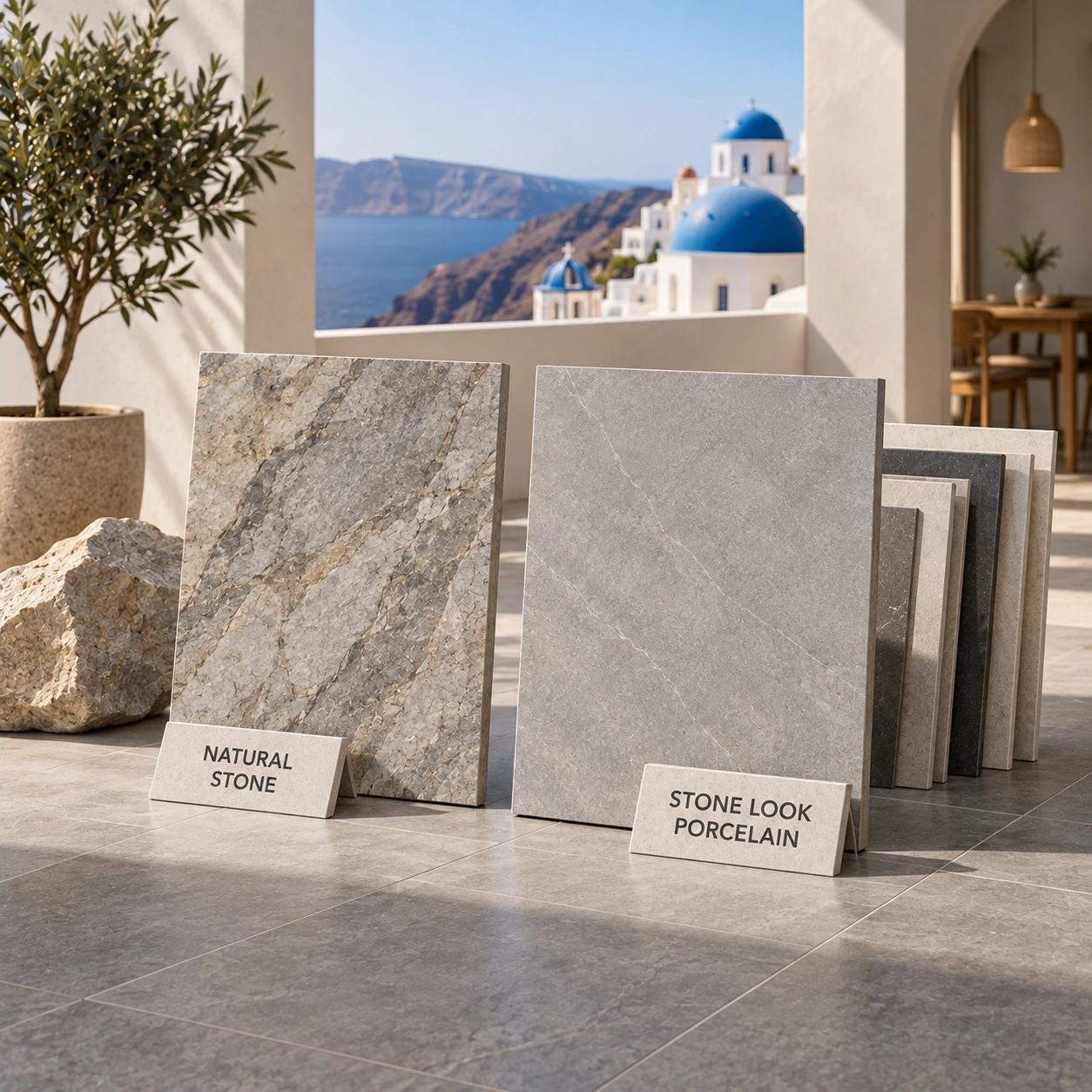
Picture a hospitality group renovating properties in Athens, Santorini and Crete.
They want one recognisable design language.
If every location requires a closely coordinated stone finish, natural variation can make matching more complicated. A stone look porcelain tile gives buyers greater control over colour, format and repeatability.
Modern porcelain manufacturing can create detailed stone effects while retaining the dimensional consistency expected from an industrially produced surface.
That matters to:
The buyer is not necessarily rejecting natural stone.
They are choosing predictability.
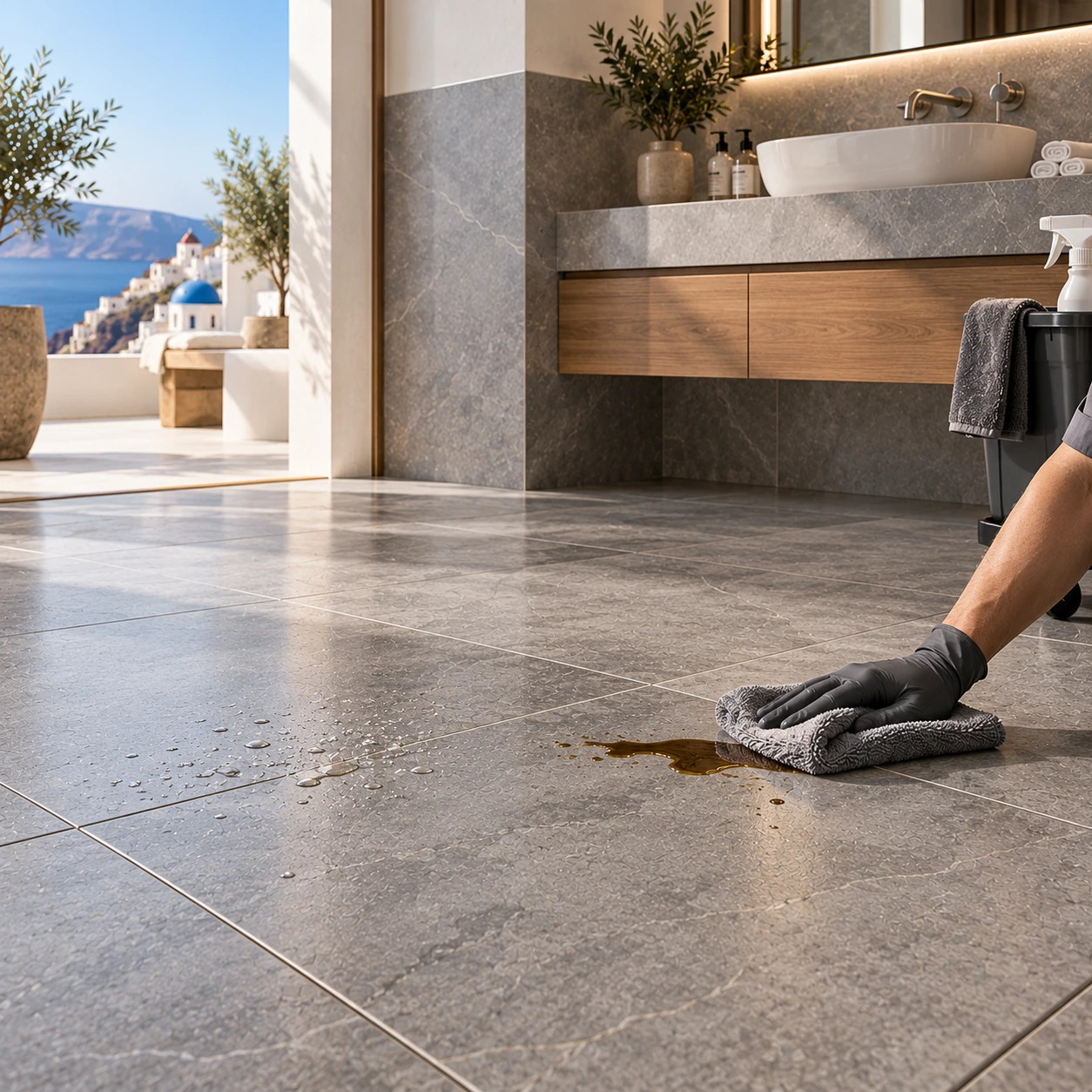
Nobody enjoys discussing maintenance during the mood-board presentation.
Facility managers definitely discuss it later.
Porcelain has a dense structure. Under recognised ceramic classification, porcelain tiles are associated with water absorption of 0.5% or below, with ISO 10545-3 providing the standard method used to determine tile water absorption.
For hospitality, bathrooms, kitchens and regularly cleaned commercial spaces, that low absorption becomes useful.
Natural stone performance varies by stone type, finish and installation.
So rather than asking:
“Which material is better?”
Greek project buyers increasingly need to ask:
“Which material creates fewer maintenance questions for this particular application?”
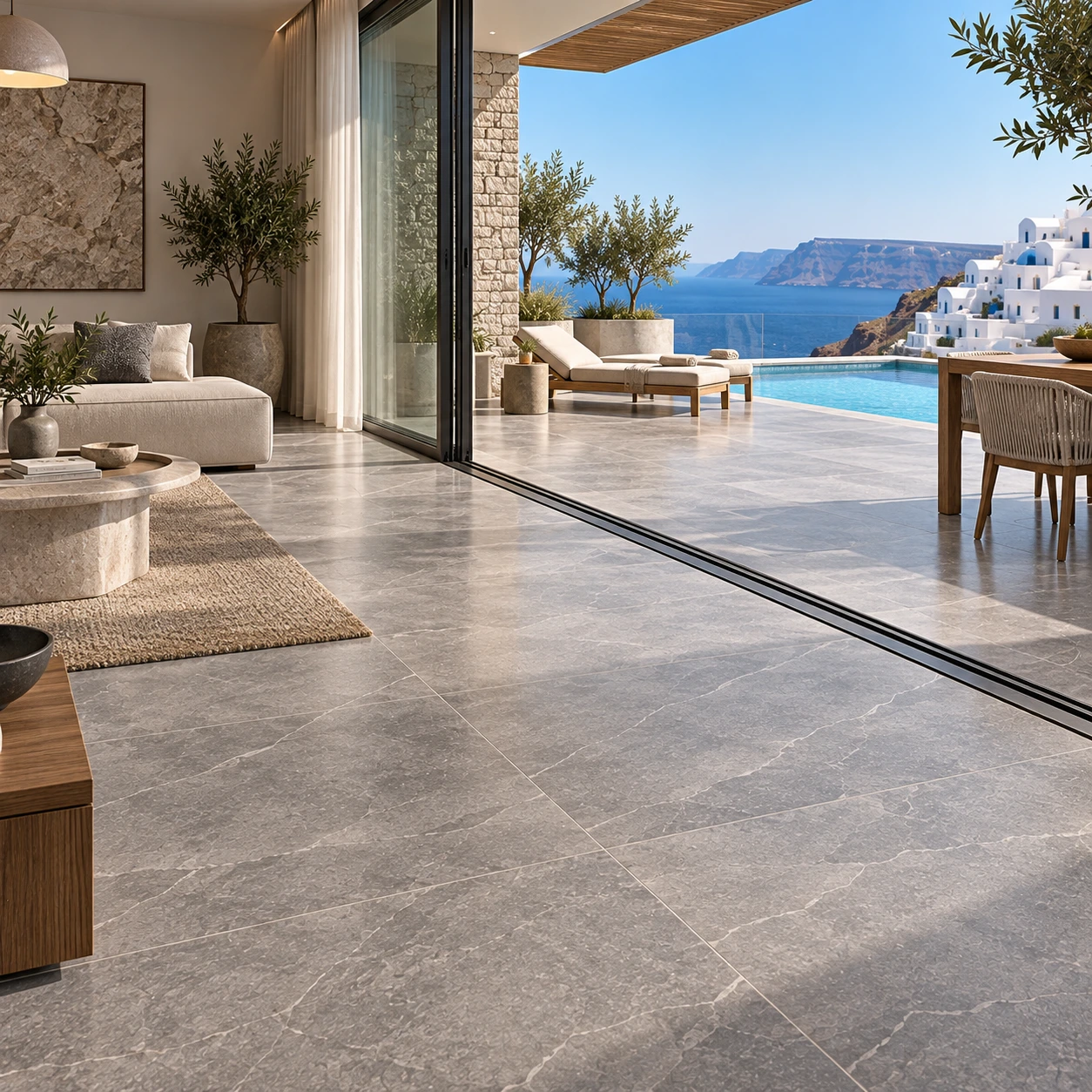
Greek architecture naturally gives significant importance to terraces, balconies, patios, pool areas and hospitality spaces that flow outdoors.
Current European tile design is increasingly focused on visual continuity between indoor and outdoor environments, with stone-look porcelain tiles collections offered across different surfaces and thicknesses for exactly this reason.
This opens an attractive opportunity for importers.
A buyer can select a similar stone language for a living room, terrace and hospitality outdoor area while changing the technical surface according to the application.
Instead of selling one tile, dealers can begin selling a complete space.
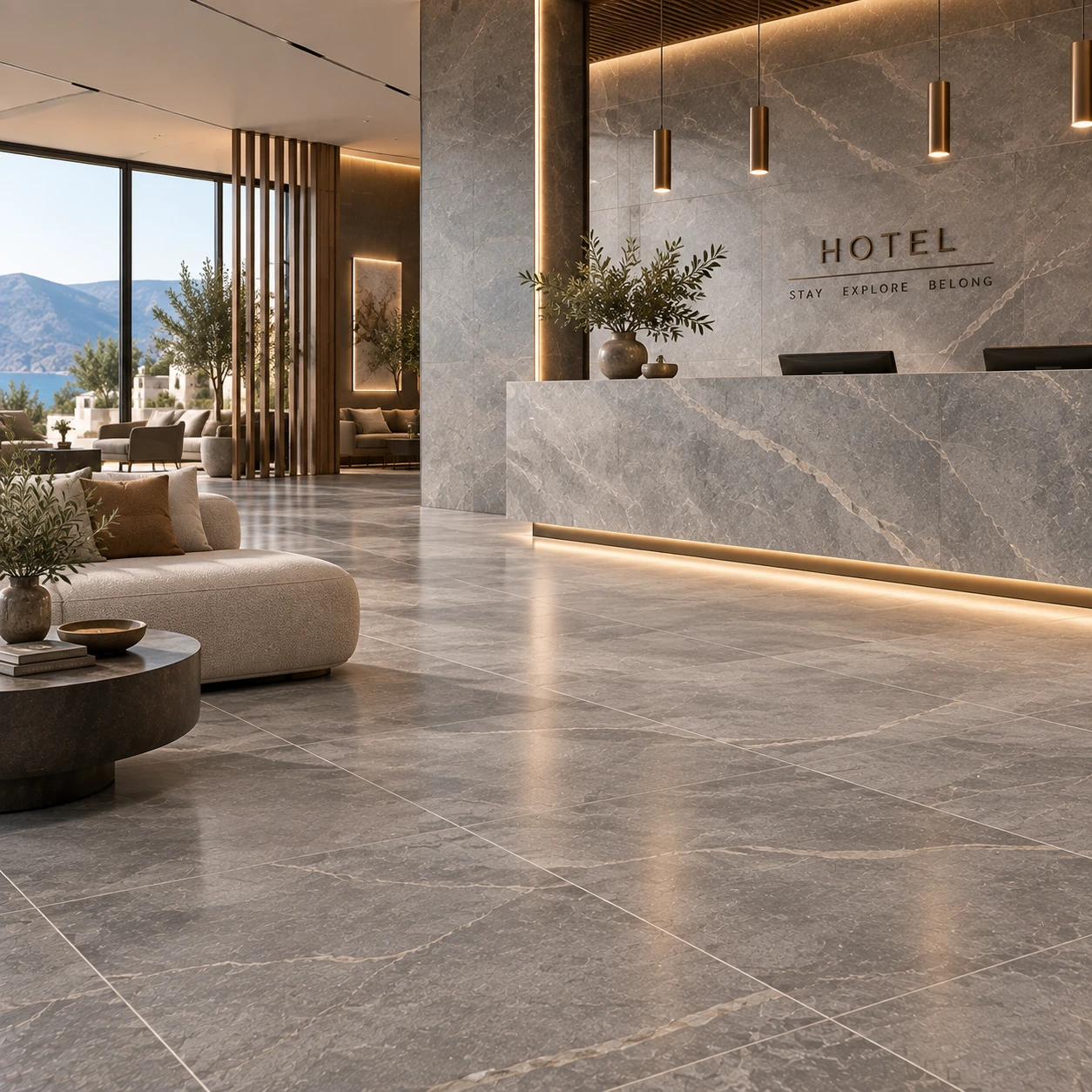
Stone-inspired design works best when it has room to breathe. Too many grout lines can interrupt veining and texture.
That is why larger porcelain formats are increasingly important in premium interiors. European ceramic trends continue to feature large surfaces and highly realistic stone interpretations.
In Greece, 60×120 cm stone look porcelain tiles are particularly useful for villas, hotel spaces and larger residential interiors where buyers want stronger visual continuity.
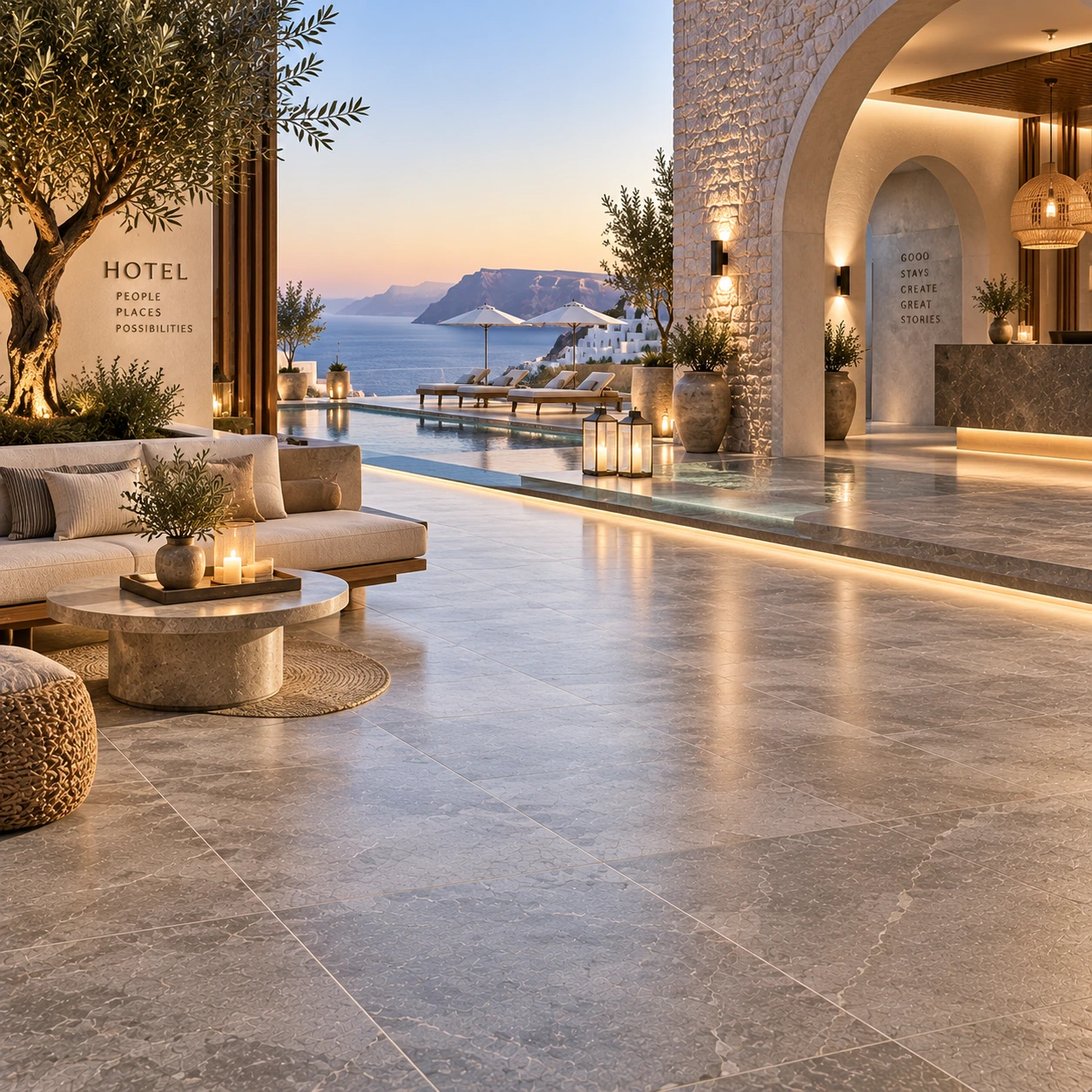
Greece's tourism economy gives this conversation additional weight.
According to the Bank of Greece, travel receipts reached €23.63 billion in 2025, up 9.4% year-on-year, while inbound traveller flows increased 6.4%.
Hotels and tourism-oriented properties therefore remain commercially important buyers of interior and exterior finishes.
For these projects, the ideal material often needs to look premium while also supporting repeated cleaning, multiple rooms and easier replacement planning.
That is exactly where stone look porcelain tile can compete strongly.
| Project Requirement | Better Fit |
| Maximum natural variation | Natural stone |
| Consistent appearance across rooms | Stone look porcelain |
| Multiple repeat properties | Stone look porcelain |
| Authentic natural material is essential | Natural stone |
| Easier routine maintenance | Often porcelain |
| Coordinated indoor/outdoor aesthetic | Porcelain collections |
| Large-format manufactured tile | Porcelain |
| Unique individual character | Natural stone |
| Repeat ordering | Porcelain can offer greater predictability |
| Mediterranean stone aesthetic | Both |
Greek importers need more than attractive samples. They need coordinated collections, useful formats and dependable export support that make it easier to build a complete porcelain category.
Click Tiles offers:
That helps dealers sell porcelain as more than an alternative to stone, it becomes a complete design solution.
Natural stone will always have its place.
But when buyers want stone character with easier maintenance, repeatable design and flexible formats, stone look porcelain tile becomes difficult to ignore.
Explore the Click Tiles portfolio for stone look porcelain tiles collections, or contact our export team to discuss samples, pricing and container planning for Greece.
Not completely. Natural stone remains relevant where authentic material variation is important. Stone-look porcelain is increasingly attractive for projects that prioritise consistency, practical maintenance and repeatable design.
They can combine a stone-inspired appearance with manufactured consistency and low water absorption, while offering multiple formats and finishes for different project applications.
They can be suitable for villas when the selected product's technical specifications match the intended indoor or outdoor application. They can also help create a coordinated stone-inspired design across different areas.
Some are designed for outdoor applications, but buyers should check the specific product's surface finish, slip performance, thickness and environmental suitability before specification.
Availability depends on the collection and manufacturer. Click Tiles offers formats including 30×60, 60×60 and 60×120 cm according to the product range described in this article.
Porcelain generally has low water absorption and is commonly straightforward to clean, while natural stone maintenance varies considerably by stone type, finish and treatment.
