

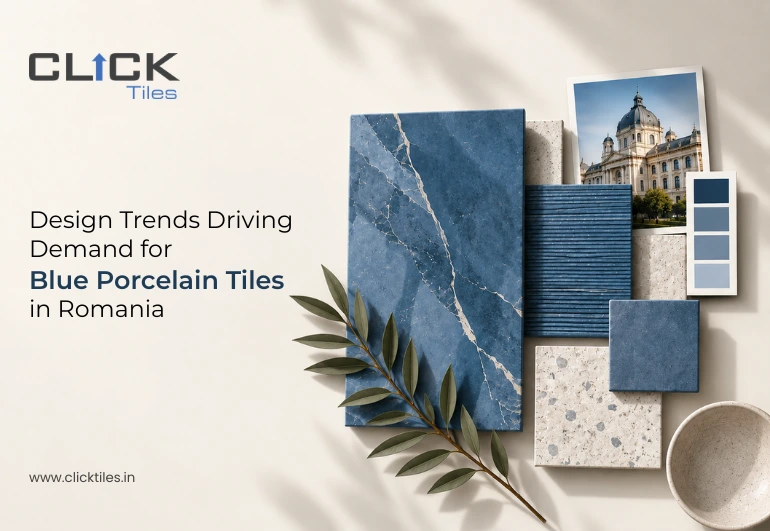
Why are blue porcelain tiles becoming more relevant to Romanian tile buyers?
Blue is no longer being treated as just a bathroom or pool colour.
Across contemporary interiors, designers are using blue porcelain tiles in kitchens, cafés, hotel spaces, feature walls and premium residential projects, often paired with wood, stone and warm neutrals.
That shift matters for Romanian showrooms.
When buyers start asking for more expressive colours, a catalogue built only around white, beige and grey can quickly feel predictable. Adding the right blue shades gives dealers something fresh to display, helps attract design-led customers and opens up higher-value project conversations.
Romania's construction market provides an active base for new surface demand. Construction-work volume increased by 8% in 2025, while non-residential building activity grew by more than 20% year-on-year in each of the final two quarters.
At the same time, European ceramic design is moving toward more expressive colour, tactile surfaces and personalised interiors.
That is where blue finds its opening.
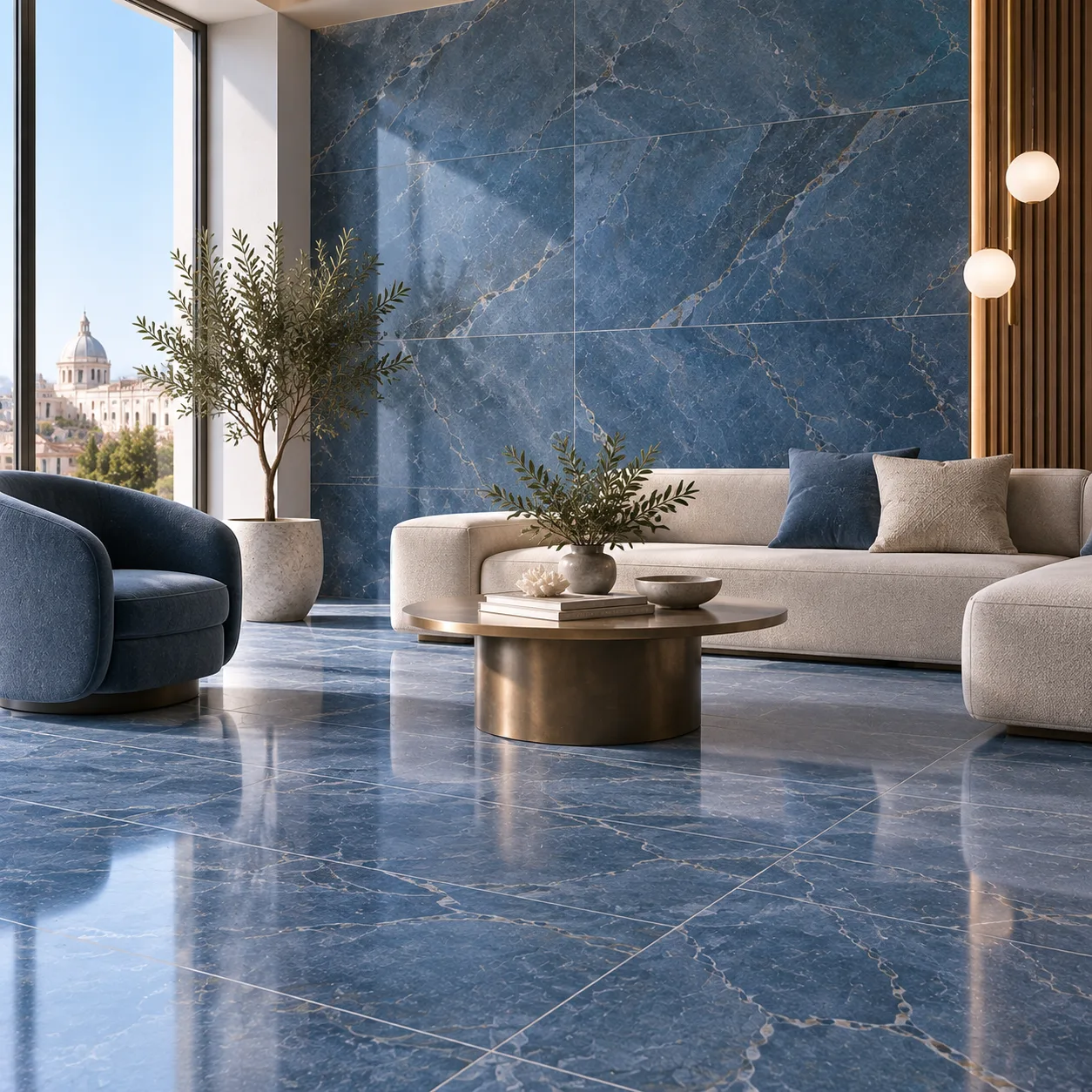
Ask an interior designer why they selected blue and you probably will not hear:
“Because blue is trending.”
They are more likely to describe how the room should feel. Blue works across multiple interior styles because its visual character can change significantly with shade, finish, lighting and surrounding materials.
Current European ceramic trends support this direction. Cersaie’s 2025 trend report highlighted nature-inspired colours, specifically noting sky blue for serenity and teal for a soothing effect. It also identified colour drenching, the use of one colour across several elements of a room as a growing interior approach.
That gives blue porcelain tiles much more design freedom than the familiar strip of blue around a bathroom wall.
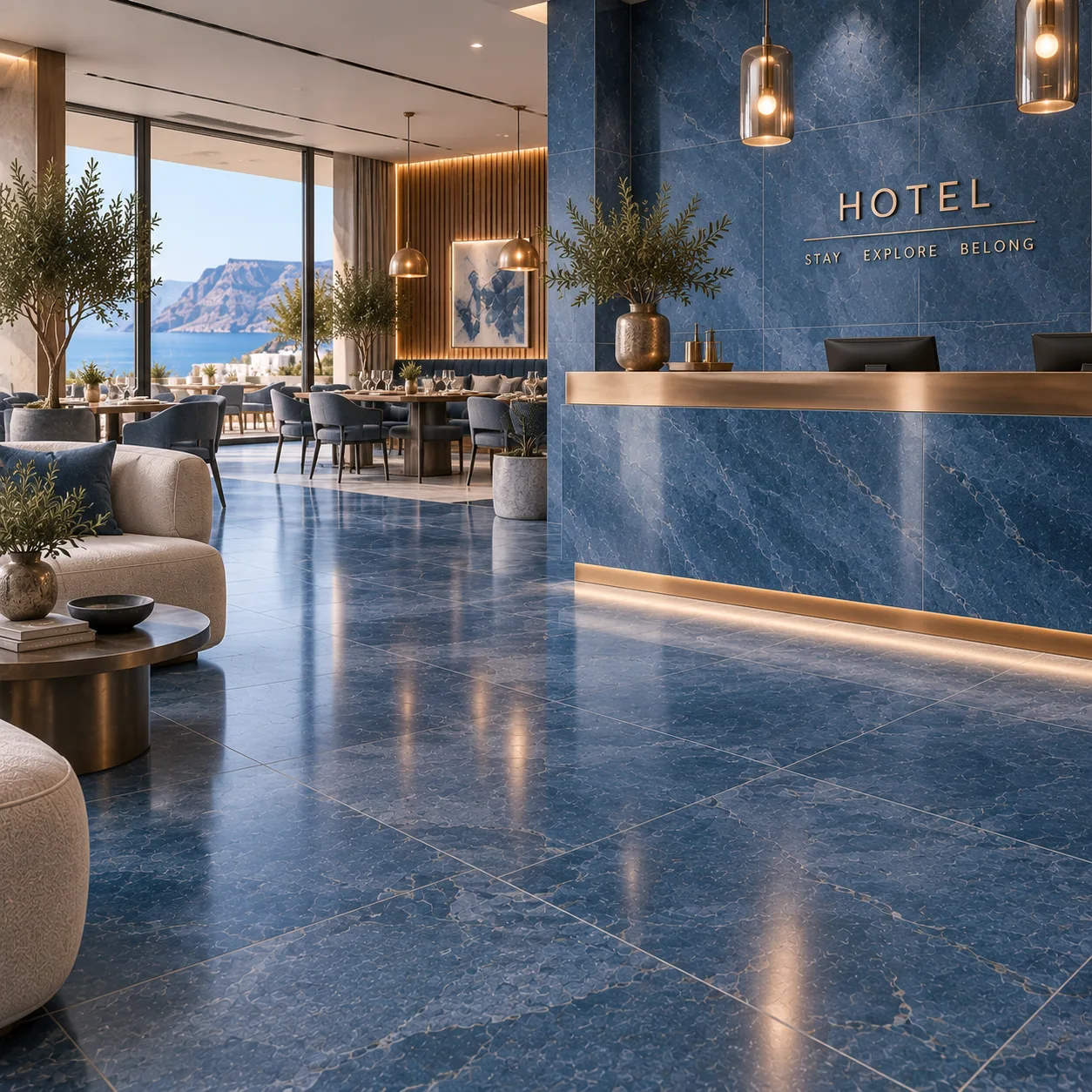
Consider two hotel bathrooms.
The first has white marble-look surfaces, chrome fittings and beige cabinetry.
Perfectly acceptable.
The second combines muted blue tile, warm timber and brushed metal.
Which one are guests more likely to remember?
Hotels, restaurants and cafés increasingly need interiors with identity. Romania's strong recent non-residential construction performance makes this particularly relevant for distributors supplying commercial projects.
Different blues can target very different environments:
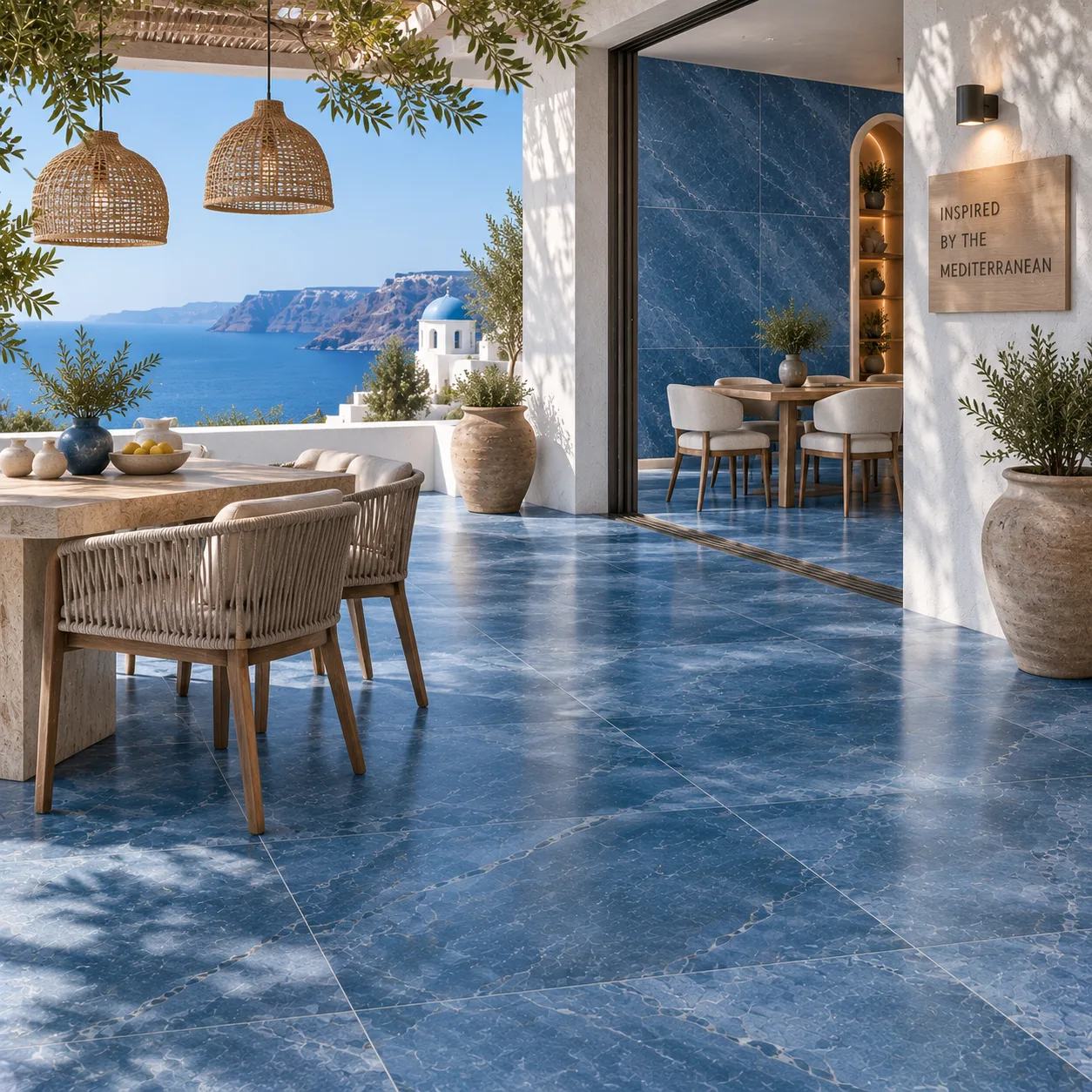
Blue also benefits from another broader ceramic trend: renewed interest in Mediterranean materials and atmospheres.
Cersaie's 2025 review noted rising interest in Mediterranean stone references alongside natural, tactile and emotionally warmer surfaces.
That matters because blue porcelain tiles work naturally with materials Romanian designers are already comfortable using.
Think:
Suddenly, blue does not feel like the “bold choice.”
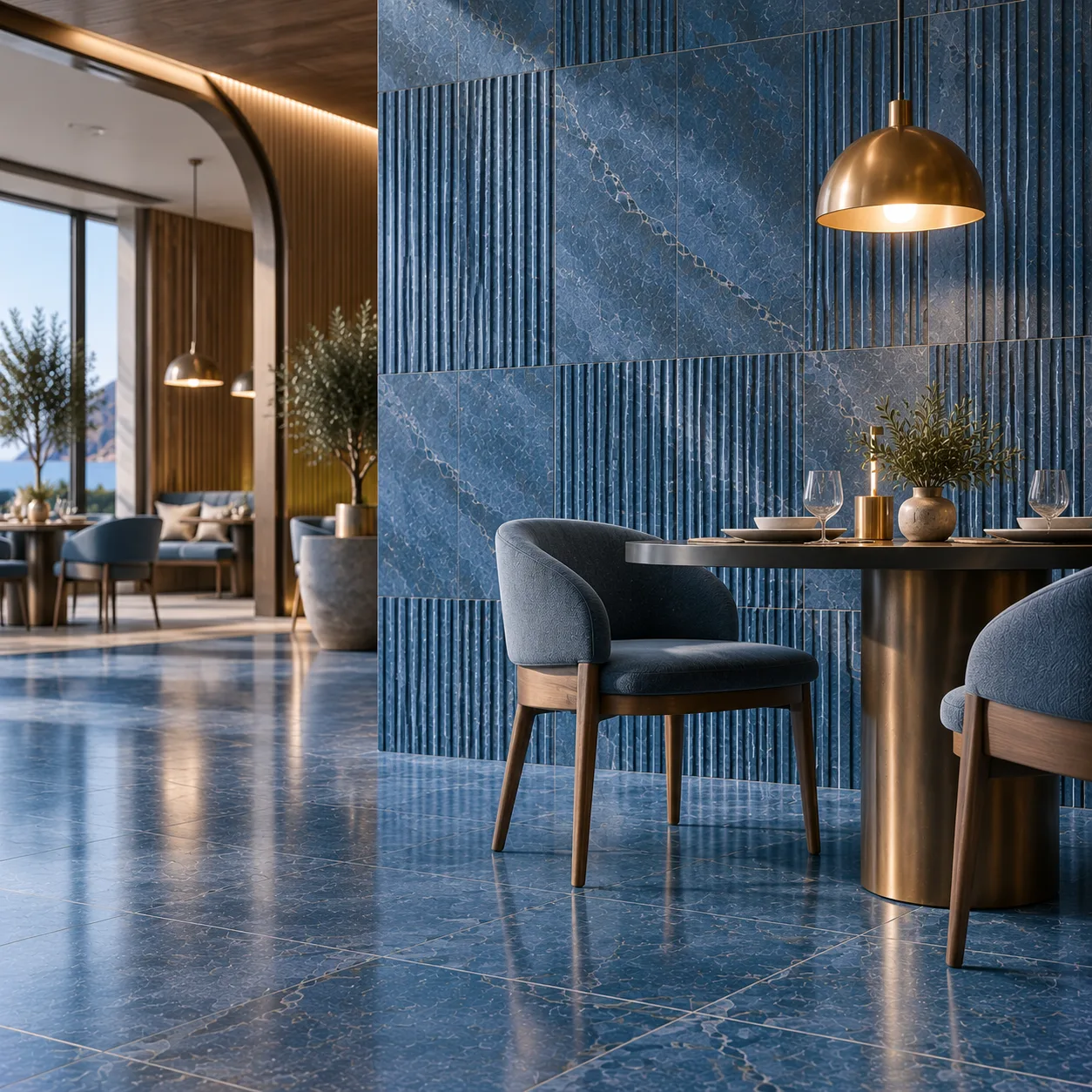
Another important shift is that colour is no longer being sold only as a flat surface.
Current ceramic trends are strongly embracing ribbed, grooved, fluted and three-dimensional finishes, while matt-and-gloss contrasts are being used to make light part of the design.
For blue porcelain tiles, this changes the showroom conversation.
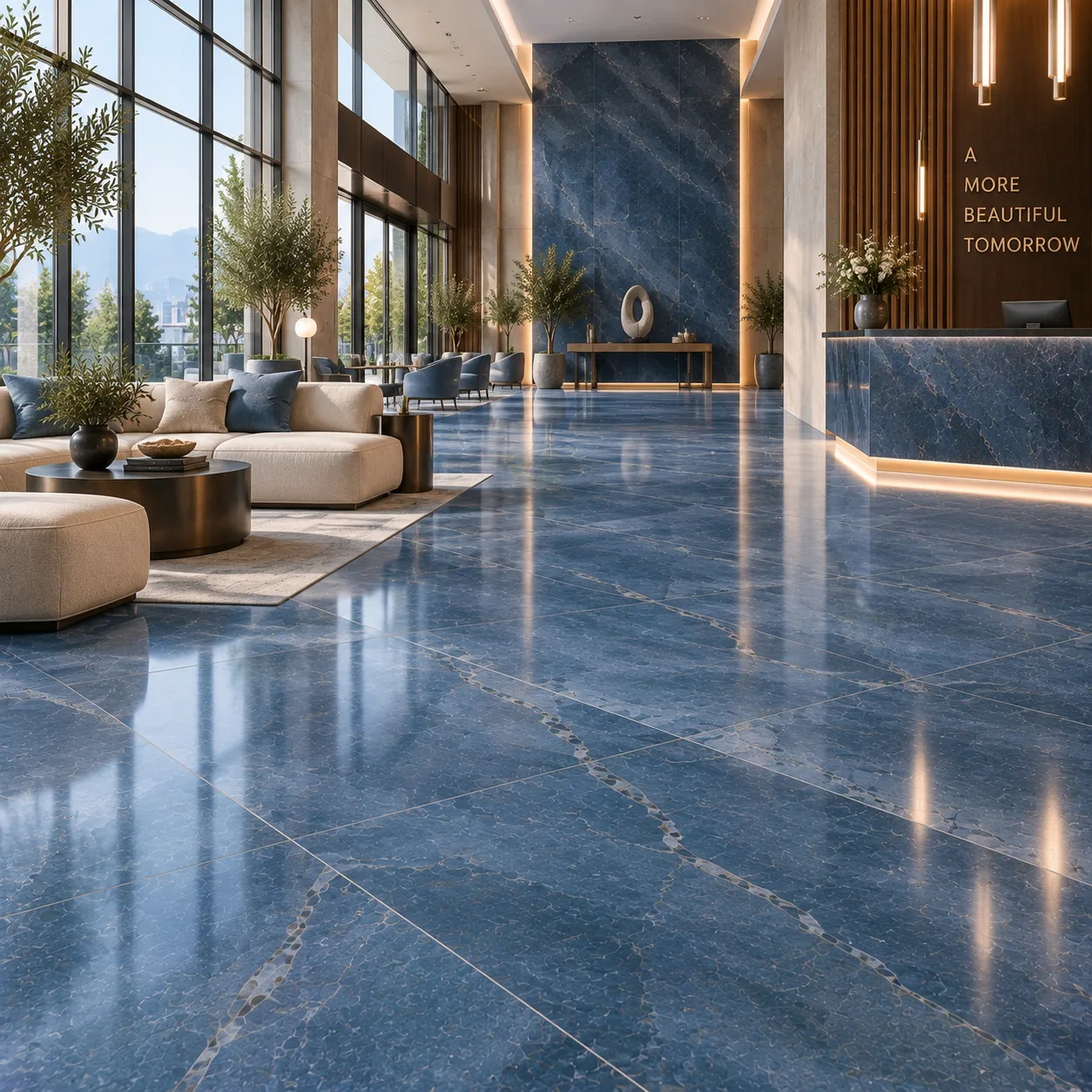
Coloured tiles were once treated mainly as accents.
Large-format porcelain is changing that.
Cersaie identified growing use of large ceramic formats and continuous surfaces as part of the broader “total look” approach to interiors.
For Romanian project buyers, larger blue porcelain tiles can therefore move beyond backsplash applications into feature floors, living areas, hotel walls and commercial interiors.
Click Tiles' Romanian-focused portfolio currently includes 30×60, 60×60 and 60×120 cm porcelain formats, with 60×120 positioned for contemporary projects seeking fewer grout lines and stronger visual continuity.
For importers, size variety helps turn a colour trend into an actual project range.
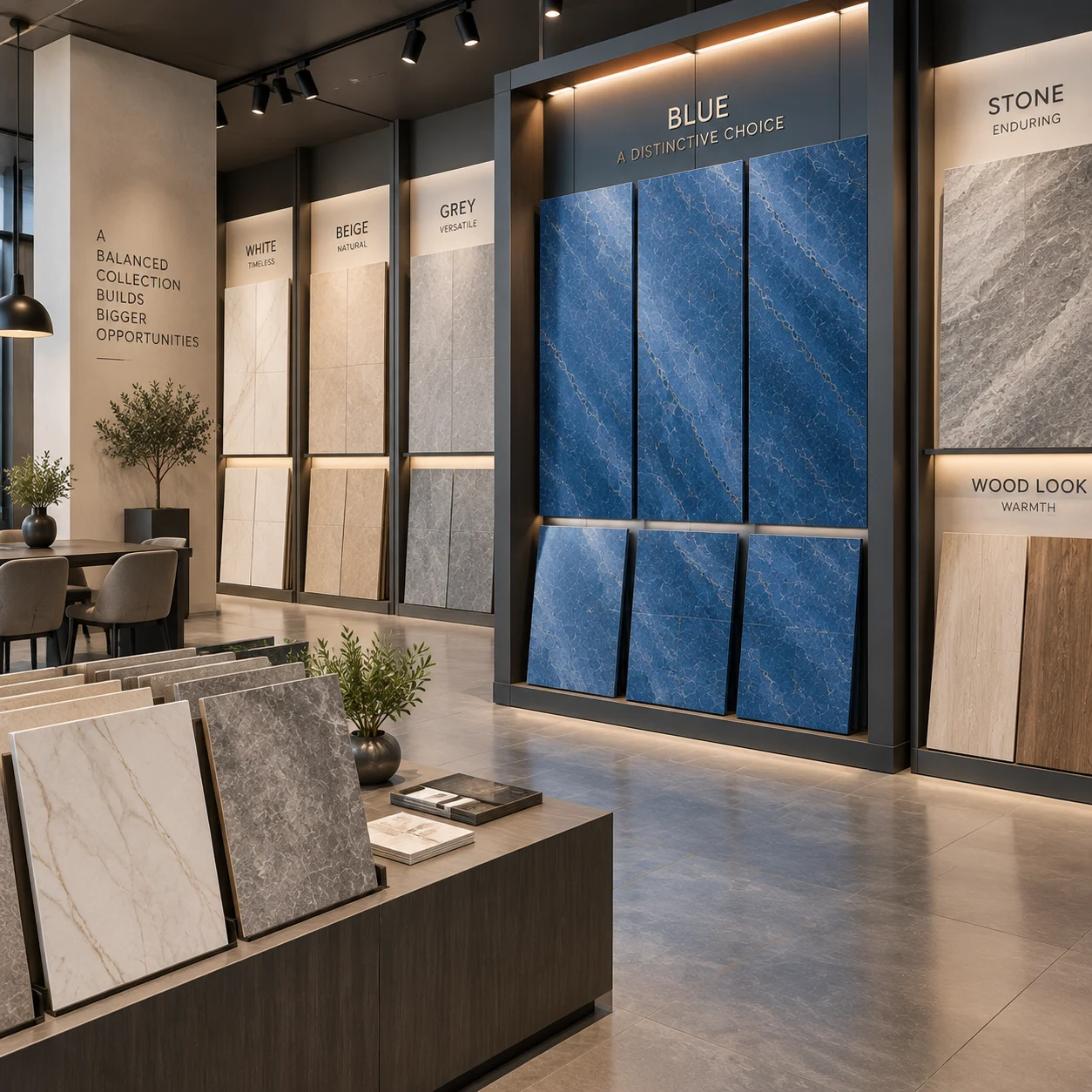
This is where commercial judgement matters. Blue is growing as a design category. That does not mean half the warehouse should become blue. Neutrals still provide the broadest market coverage. Coloured surfaces work better as a focused layer within the overall portfolio.
A sensible B2B strategy might include:
| Blue shade | Design character | Suitable applications |
| Soft blue | Calm and light | Residential bathrooms, bedrooms, relaxed interiors |
| Blue-grey | Contemporary and understated | Apartments, offices, modern commercial spaces |
| Muted blue | Refined and versatile | Boutique hotels, cafés, living spaces |
| Teal | Rich and expressive | Restaurants, feature walls, retail |
| Navy / deep blue | Dramatic and premium | Hospitality, lounges, luxury interiors |
| Project type | Possible application |
| Hotels | Bathrooms, reception features, guest-room accents |
| Restaurants & cafés | Feature walls, backsplashes, flooring where technically suitable |
| Apartments | Bathrooms, kitchens, living-area accents |
| Premium residences | Feature walls and coordinated interiors |
| Retail stores | Display walls and branded environments |
| Offices | Reception areas and selected feature surfaces |
| Hospitality projects | Statement walls and decorative zones |
For Romanian importers, the advantage is not just having more designs. We have the right mix of sizes, finishes and export support to build a collection that can serve both everyday retail demand and design-led projects.
Click Tiles offers:
Blue does not need to become Romania's biggest tile colour to become a profitable category. It simply needs the right design, application and presentation.
Explore the Click Tiles portfolio to discover blue porcelain tiles collections for your market. Contact the export team to discuss samples, pricing and container planning for Romania.
Yes. Blue porcelain tiles can work across modern residential, hospitality and commercial interiors, particularly when coordinated with materials such as wood, stone-inspired neutrals, marble-look surfaces and metal.
They can be used for suitable walls and floors in bathrooms, kitchens, living spaces, hotels, restaurants, cafés, retail environments and other interior applications, depending on the product's technical specifications.
Muted blue, blue-grey, teal and deeper navy tones can all work in hospitality, depending on the desired atmosphere, lighting and surrounding materials.
They can be suitable for bathrooms when the specific tile and finish are approved for the intended application. Buyers should check water, slip and installation requirements.
Blue works particularly well with warm wood, white, beige, stone-inspired neutrals, marble-look surfaces, terracotta and selected metallic finishes.
Large-format options depend on the collection and supplier. Click Tiles currently references 60×120 cm porcelain formats, alongside 30×60 and 60×60 cm options. Verify availability for the specific blue collection before publishing.
Importers should consider shade demand, formats, finishes, technical specifications, sample approval, batch consistency, packaging, MOQ, container planning and expected project applications.
