

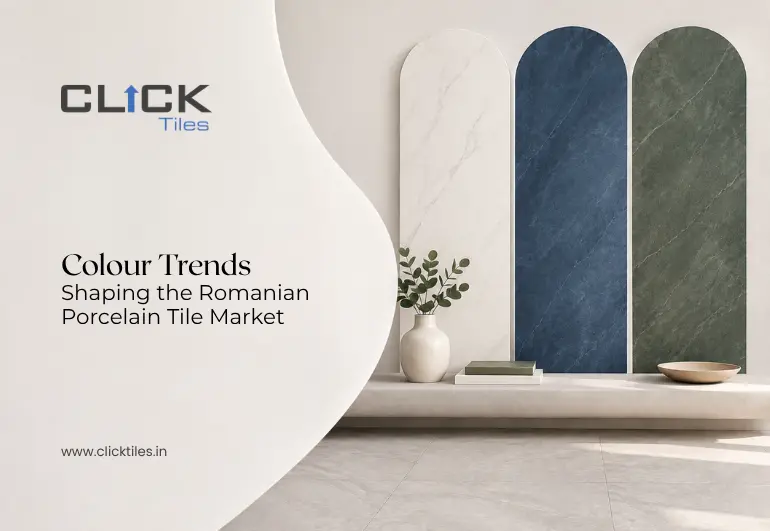
A tile importer can get the sizes right, negotiate a competitive rate and still end up with slow-moving stock.
Why?
Because colour often makes the first sale before specifications make the second.
Retailers, architects and project buyers in Romania have a vision beyond the modular aspect of tiles. They select tiles according to the ambience of a house, the image of a hotel or the persona of the commercial place. This is the reasoning behind the importance of white porcelain tiles, blue porcelain tiles and green porcelain tiles in the choice of importers when preparing their future collections.
It is not enough to stick to every fashion trend out there. It is important to understand what shades will give volume and what can create an extra margin or should be picked selectively.
A strong colour strategy gives every product a reason to be there. It helps dealers explain the range, lets project buyers visualise applications and protects your cash from being locked into shades that looked exciting only in the catalogue.
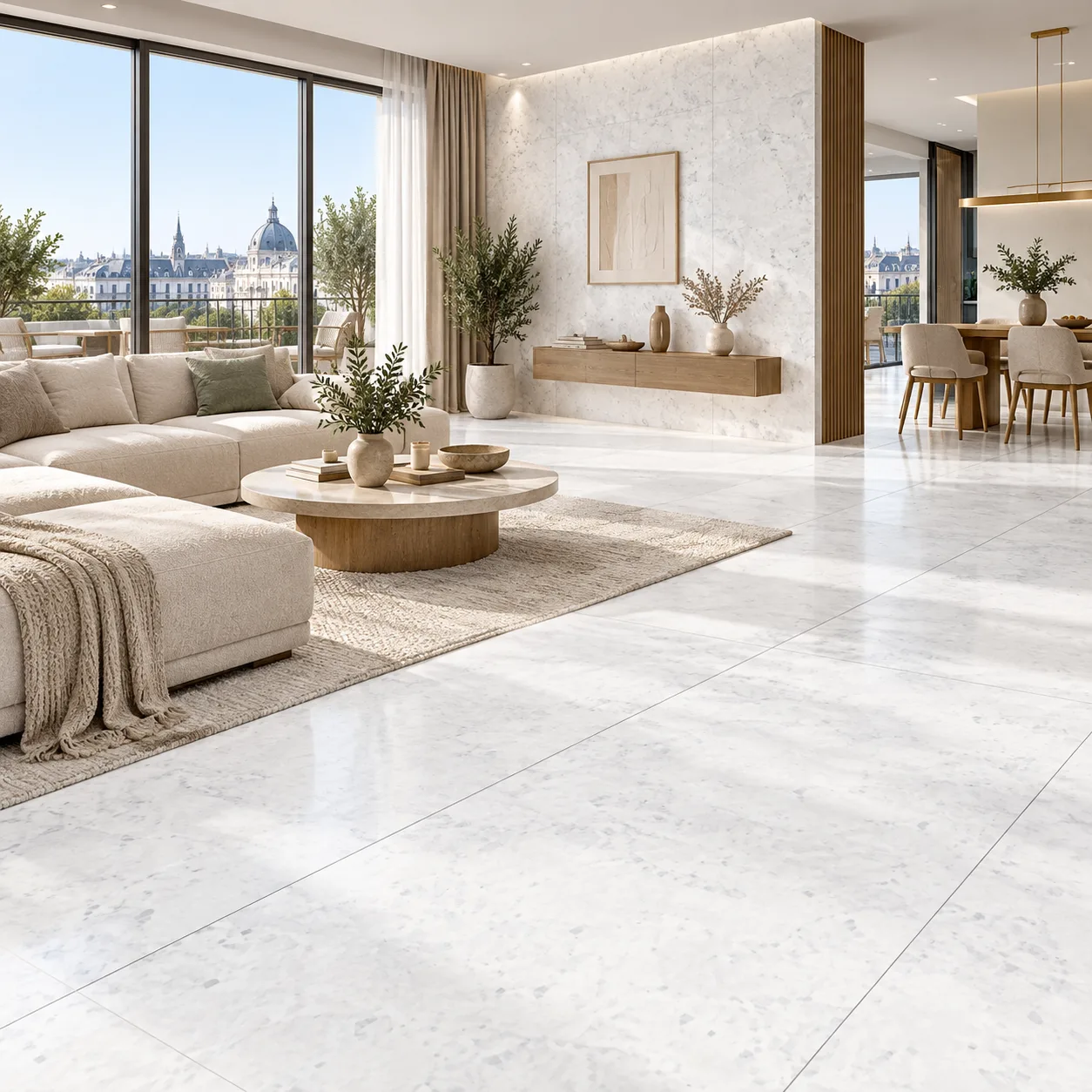
Ask a retailer which colour fits the widest range of projects, and white will almost always enter the conversation.
White porcelain tiles can work in apartments, hotel bathrooms, kitchens, offices and retail interiors. They brighten compact spaces, match easily with other materials and simplify decisions for buyers who do not want a design risk.
But one white is not enough. Ten nearly identical whites are too many.
Build a useful mix:
The strength of white porcelain tiles is flexibility. One well-planned range can serve several buyer groups without making your catalogue repetitive.
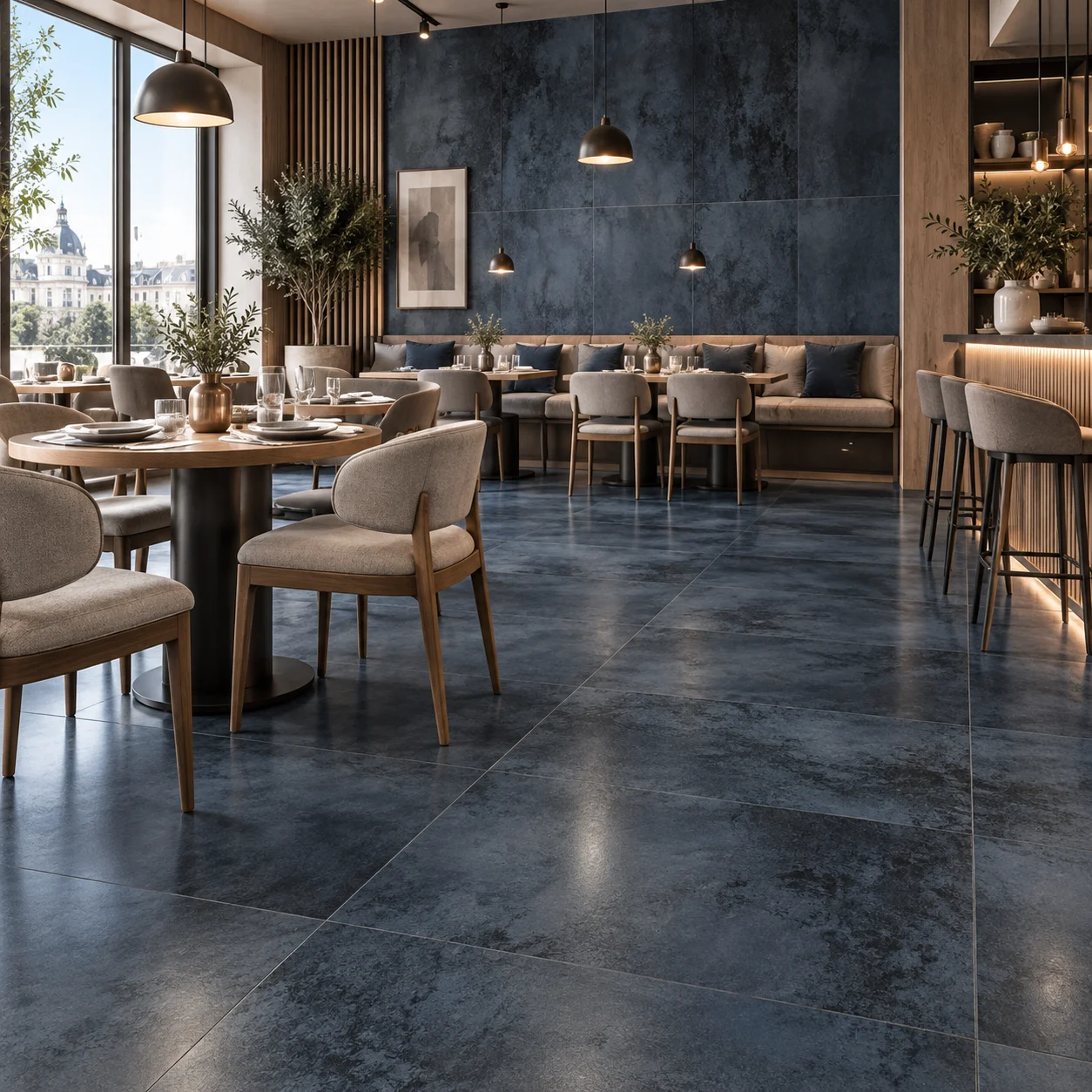
Blue used to be treated as a niche colour for bathrooms, pools and decorative corners. Now it has more room to play.
Blue porcelain tiles can bring personality to cafés, boutique hotels, restaurant walls and contemporary kitchens. Deep navy feels rich. Muted blue feels relaxed. Patterned blue can suit hospitality and holiday properties.
Importers should still buy blue with discipline:
Blue porcelain tiles sell better when retailers show the finished look. A loose sample may feel bold. The same tile beside wood, beige or white suddenly feels easier to use.
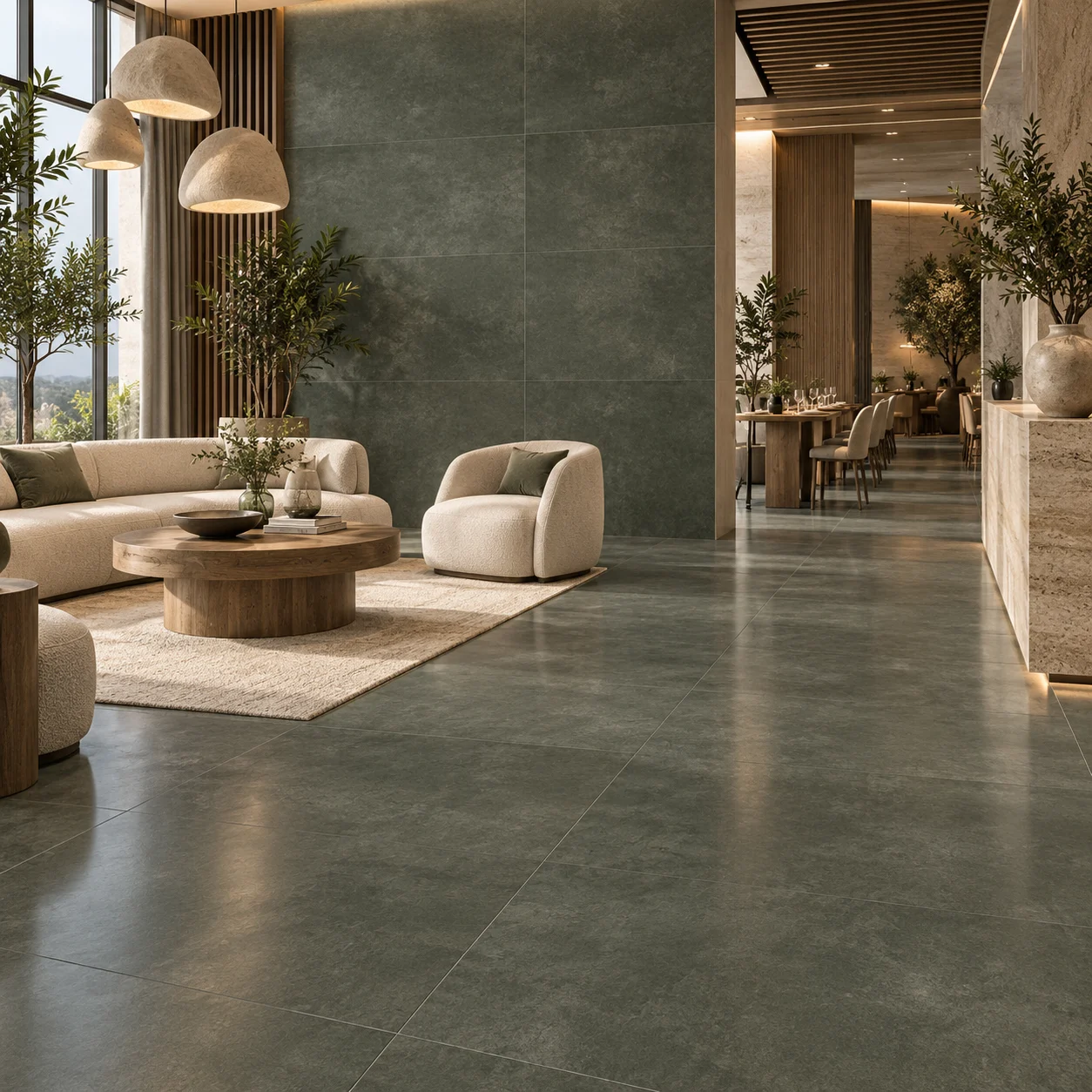
Some projects need to feel safe. Others need to be memorable.
That is where green porcelain tiles can earn their place.
Sage and olive tones suit calm interiors. Emerald can elevate a restaurant, hotel washroom or premium store. Stone-inspired green works for architects who want something different without turning the space into a colour experiment.
The category can support stronger margins, but it should not be overstocked. Choose a few shades with clear applications instead of buying every green in the catalogue.
Green porcelain tiles need a confident sales story. When dealers know where to recommend them, the colour feels exciting rather than risky.
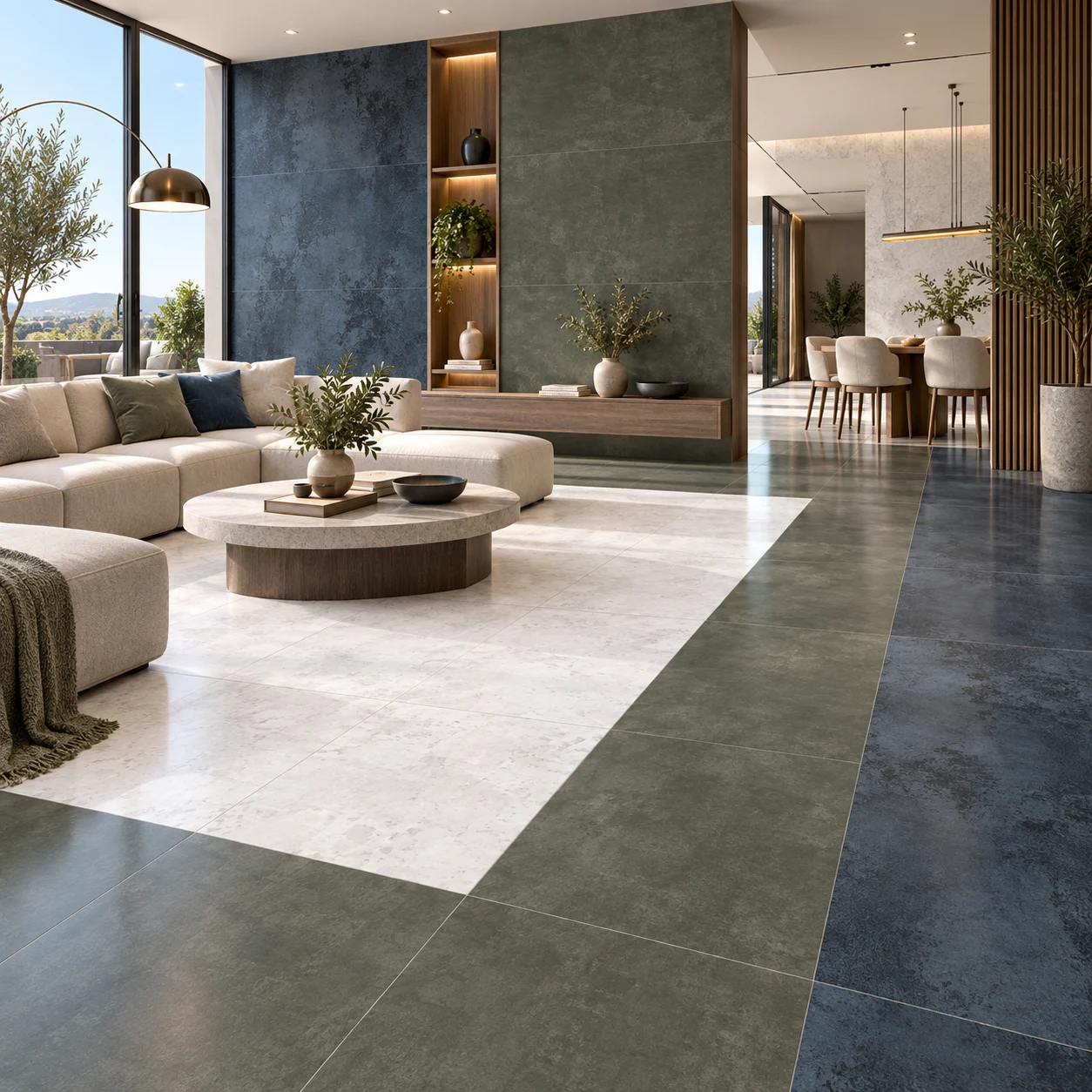
A collection becomes harder to sell when every colour stands alone.
A better approach is to build coordinated families. White porcelain tiles can anchor neutral ranges with grey, beige or marble designs. Blue porcelain tiles can be paired with wood-look floors or clean white walls. Green porcelain tiles can sit beside warm stone and timber-inspired surfaces.
This gives retailers more than a product to show. It gives them a complete room to sell.
Not every shade deserves the same quantity.
White may justify deeper inventory. Blue and green can create stronger visual impact but may need smaller, focused orders.
Before confirming a container, ask:
The best collection is not the one with the most colours. It is the one where every colour has a buyer, an application and a sensible stock level.
Colour attracts attention, but consistency protects the importer.
The showroom sample, first shipment and repeat order must match closely enough for retailers and project buyers to keep trusting the range. Click Tiles helps Romanian importers build coordinated porcelain collections for residential, commercial and hospitality markets.
Partners benefit from:
Whether the requirement is dependable white porcelain tiles, expressive blue porcelain tiles or distinctive green porcelain tiles, Click Tiles gives importers the variety to follow demand without losing control of quality or supply.
Romanian retailers do not need another catalogue full of random shades. They need colours they can explain, display and sell with confidence.
Build the next collection around clear applications, balanced quantities and coordinated design stories. Partner with Click Tiles to turn colour trends into products that move, not stock that waits.
White porcelain tiles generally have the widest demand because they suit apartments, hotels, offices, kitchens, and bathrooms.
Yes. Softer and muted blue porcelain tiles are increasingly used in living rooms, cafés, restaurants, and boutique hospitality projects.
Green porcelain tiles are popular in premium residential interiors, hotel bathrooms, feature walls, wellness spaces, and design-led commercial projects.
Usually no. White porcelain tiles typically justify deeper inventory, while blue and green collections are often stocked in smaller, more targeted quantities.
Room-based displays, coordinated material combinations, and clear application examples help customers visualise how coloured porcelain tiles will look in a finished space.
