

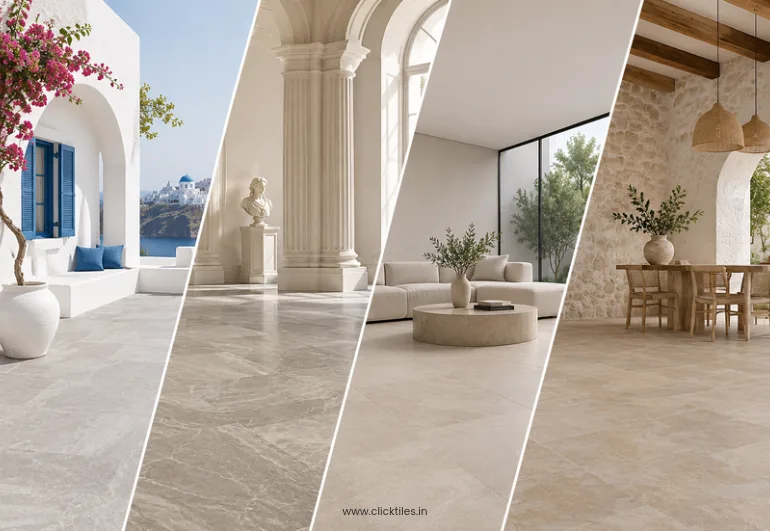
A stone look porcelain tile that complements a whitewashed Cycladic villa may not create the same effect in a contemporary Athens apartment or a traditional mountain property.
For Greek tile importers, this creates an important buying question: Which stone-inspired designs will suit the architectural styles and practical requirements of different customers?
The answer goes beyond selecting attractive beige, grey or slate-effect tiles. A successful collection should consider architectural character, lighting, surface finish, tile dimensions and the applications that Greek retailers and project buyers need to serve.
Greek tile importers can select stone look porcelain tiles by matching stone-inspired designs with local architectural styles, evaluating samples under different lighting conditions, choosing suitable finishes for each application, and offering practical sizes. A balanced collection may include warm limestone and travertine looks, contemporary stone textures and selected slate-inspired designs, supported by verified technical specifications.
Stone look porcelain tiles are manufactured porcelain tiles designed to reproduce the visual character of natural stone, such as limestone, travertine, marble or slate. Depending on the collection, they may feature stone-inspired colours, veining, texture and surface variations.
Unlike natural stone, their appearance is created through the tile manufacturing process. However, performance characteristics such as slip resistance, water absorption, frost suitability and wear resistance must still be verified for the specific product and application.
Greek architecture gives many ideas. Instead of having a long list of different shades of beige and grey, think about the spaces your customers are really working on. Here are a few smart choices that can cover different architectural needs.
Begin with the structure, not the tile selection.
In houses resembling those in the Cycladic islands, it's best to use limestone and travertine stones and porcelain tiles in ivory, sand, and warm beige. Such tiles combine nicely with the wall and natural light, not making the floor too fancy.
Houses in Pelion or Zagori are representative of their own style. Their appearance connects them with the usage of stone and wood. Porcelain tiles looking like limestone or slate might work better there.
In apartments in Athens people usually prefer cleaner stone designs, milder greys, and lack of movements in designs.
So, what do the importers learn from that?
Instead of selecting several nearly identical designs, Greek importers can work with a porcelain tile manufacturer in India to explore collections that serve different architectural styles, applications and customer preferences.
| Greek architectural context | Stone-inspired design direction | Importer consideration |
| Cycladic-inspired villas | Warm limestone, ivory and soft travertine looks | Light reflection, subtle patterns and indoor/outdoor coordination |
| Traditional Pelion and Zagori properties | Earthy limestone, slate-inspired and natural textures | Compatibility with traditional materials and finishes |
| Contemporary Athens apartments | Restrained stone patterns, warm greys and neutral tones | Practical sizes, design continuity and maintenance |
| Modern hotels and resorts | Refined travertine, limestone and selected marble-inspired designs | Visual consistency, traffic and finish suitability |
| Outdoor hospitality spaces | Natural stone-inspired textures | Verified wet slip resistance and outdoor suitability |
These are design directions rather than fixed regional preferences. Importers should validate them against their customers' project types, local demand and current architectural requirements.
Take a stone look tile sample. Put it outside. Look at it in the sun. Then move it into a room.
Notice the difference?
In Mediterranean sun some patterns and surface changes might stand out more. Inside warm and cool tones can change how the same tile looks near furniture and walls. A grey tile might look blue. A cream color might look more yellow than expected.
This matters when choosing stone look porcelain tiles for houses, hotels and commercial areas. Before approving a group of tiles compare samples in different lights. Also put tiles together. A pattern that looks good on one tile might look much on a full floor.
A holiday home, hotel lobby and beachfront restaurant may require different surface characteristics, even when the same stone-inspired design is preferred.
For dry indoor spaces, buyers may consider matte or polished finishes depending on the design and performance requirements. Outdoor dining areas, exposed walkways and other moisture-prone locations require particular attention to slip resistance, cleaning conditions and weather exposure.
Greek importers should request product-specific technical information rather than assuming that a textured or matte finish is automatically suitable for wet or outdoor applications.
For exterior projects, especially in mountainous areas, buyers should also verify frost suitability and the requirements of the proposed installation system. Coastal exposure may introduce additional considerations for cleaning, installation materials and maintenance.
The difference between a 60×60 cm tile and a 60×120 cm tile is more than the numbers on the box.
Big sizes can make a look in large modern rooms if the layout and installation are right. Smaller sizes might be better for rooms, unusual floor shapes and areas with many cuts.
For importers having many sizes can make a group of tiles useful in different projects. Check with the porcelain tiles manufacturer from India which sizes are available for each design. Don’t think every pattern is in every size. It also helps to give retailers measurements and layout tips. Sometimes better product details can close a sale faster than another discount.
| Tile size | Possible application considerations |
| 30×60 cm | Smaller rooms, wall applications and layouts with more cuts |
| 60×60 cm | Residential floors and versatile commercial layouts |
| 60×120 cm | Larger spaces, contemporary interiors and continuous stone-inspired designs |
Note: The appropriate size depends on room dimensions, layout, substrate conditions, installation requirements and the formats available in the selected design. Larger tiles may require additional attention to substrate flatness, handling and installation methods.
An importer picks twelve stone look designs because each sample looks good. Six months later three sell well. The others take up space in the warehouse.
The problem wasn’t the quality.
The group didn’t have a reason to exist.
Instead of selecting designs individually, importers can organise their collections around four practical market segments:
Before expanding the assortment, importers should review retailer feedback, sample demand, project enquiries and the availability of each design in relevant sizes and finishes. It is also useful to assess minimum order quantities, container planning, repeat-order availability and the risk of stocking several designs that serve almost identical customer needs.
| Selection factor | What to verify |
| Design range | Distinct stone-inspired styles rather than near-duplicate patterns |
| Sizes and finishes | Availability for each selected collection |
| Surface suitability | Slip resistance, wear and application requirements |
| Technical documentation | Product-specific test data and declared characteristics |
| Shade and calibre | Batch consistency and carton identification |
| Samples | Multiple-piece visual review under relevant lighting |
| Order planning | MOQ, lead time and repeat availability |
| Export coordination | Packaging, documentation and shipping arrangements |
Greek importers should also confirm the applicable EU product documentation, conformity requirements and commercial import arrangements for the specific tiles being sourced. These requirements should be verified for the actual product and intended market rather than assumed from a catalogue description.
Click Tiles is a porcelain tile manufacturer and exporter based in Morbi, India, offering porcelain tile collections for international buyers. For Greek importers seeking stone-inspired designs, the selection process involves evaluating visual styles alongside sizes, finishes, technical specifications and bulk-order requirements.
Greek buyers can explore:
Greek distributors and importers can explore relevant Click Tiles collections, request samples and discuss product specifications, quantities, packaging and export requirements before finalising their sourcing decisions.
For importers the chance is to create a group that retailers can confidently suggest, not just show. Explore the Click Tiles collection. Reach out to the export team for stone look porcelain tiles, samples, prices and questions about shipping to Greece.
Warm limestone and travertine-inspired tiles may complement Cycladic-inspired and Mediterranean interiors, while slate-inspired textures and restrained contemporary stone designs can suit selected traditional and urban projects. Final selection depends on the building's design and application.
Certain products may be suitable for outdoor use when their slip resistance, weather performance and installation requirements meet the project's conditions. Buyers should verify the specific tile's technical documentation.
Common options include 30×60 cm, 60×60 cm and 60×120 cm. The right mix depends on customer demand, project types and the sizes available in each collection.
Importers should compare multiple tiles together, assess pattern variation and review samples under different lighting conditions. They should also confirm the selected finish and technical specifications.
Buyers should evaluate product specifications, samples, shade and calibre consistency, quantities, packaging, lead times, export documentation and applicable EU requirements.
Click Tiles offers porcelain tile collections for international buyers. Greek importers can contact its export team to discuss available stone-inspired designs, samples, specifications and order requirements.
